Nestled in the heart of Lahore’s old city, the Wazir Khan Mosque stands as one of the most exquisite and culturally rich examples of Mughal architecture in South Asia. Built during the 17th century, this historic mosque is not only a place of worship but also a living museum of Islamic art, Persian calligraphy, and Lahore’s timeless heritage.
The Wazir Khan Mosque was commissioned in 1634 CE during the reign of the Mughal Emperor Shah Jahan, the same ruler who built the iconic Taj Mahal. It was constructed under the supervision of Hakim Ilmuddin Ansari, known as Wazir Khan, who served as the governor of Lahore and the emperor’s personal physician. The mosque was completed in approximately seven years, and it quickly became a central hub of religious, educational, and social activity in the walled city.
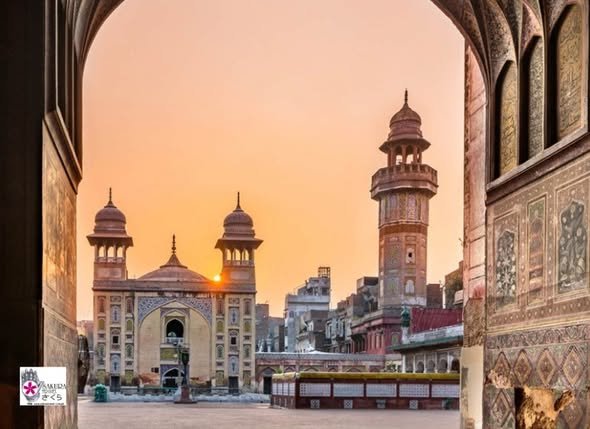
Wazir Khan Mosque is renowned for its unparalleled frescoes, kashi kari (tile work), and intricate calligraphy that covers almost every surface. The entrance is marked by a grand Persian-style gateway, which opens into a large courtyard surrounded by four minarets—each corner of the mosque is symmetrically balanced with towers that once served as lookout points and call-to-prayer stations.
Inside the prayer hall, visitors are greeted with a kaleidoscope of colors. The walls and ceilings are adorned with hand-painted floral motifs, Quranic verses, and geometric patterns—each one created with meticulous detail. The mihrab, where the imam leads prayers, is decorated with fine inlay work and beautifully carved inscriptions.
The mosque’s construction combined local craftsmanship with Persian and Central Asian design elements, making it a true blend of cultural influences that defined the Mughal Empire.
Beyond its religious significance, the mosque has long been a center of cultural life in Lahore. Situated on the Shahi Guzargah (Royal Trail)—the ceremonial route used by Mughal royalty—it was strategically placed to serve travelers, scholars, and merchants alike.
Today, the mosque still functions as an active place of worship, while also attracting tourists, historians, artists, and photographers from around the world. Its peaceful courtyard, surrounded by centuries-old walls and timeless architecture, offers a quiet escape from the hustle of the surrounding Walled City.
In recent years, the mosque has undergone significant restoration efforts, thanks to partnerships between the Aga Khan Trust for Culture, the Walled City of Lahore Authority (WCLA), and international organizations. These efforts have focused on restoring damaged frescoes, strengthening the structural integrity, and improving access for both worshippers and visitors.
The restoration has brought global attention to Wazir Khan Mosque as a symbol of Pakistan’s commitment to preserving its rich cultural and historical legacy.
For Lahoris, Wazir Khan Mosque is more than a historical site—it’s a symbol of identity, pride, and continuity. Whether it’s the soft echo of the azaan (call to prayer) or the mesmerizing sight of its painted domes glowing under the afternoon sun, the mosque continues to inspire awe and admiration.Its timeless beauty and enduring relevance make it not only one of Lahore’s most iconic landmarks but also a treasure of Islamic architecture on a global scale.
The Wazir Khan Mosque is a celebration of faith, craftsmanship, and cultural memory. It reminds us of an era when architecture was not only about utility but also about beauty, spirituality, and storytelling. As the mosque continues to stand tall amidst the narrow alleys of old Lahore, it invites every visitor to pause, reflect, and marvel at the genius of the Mughals—and the soul of Lahore itself.
For tour arrangements in Pakistan, please feel free to contact us my telephone, WhatsApp or email us at Sakura Travel.
sakuratr2004@gmail.com
WhatsApp: 0092 332 8501039