Jahangir Tomb located in the historic city of Lahore, Pakistan, the Tomb of Jahangir stands as a magnificent tribute to the fourth Mughal emperor, Nur-ud-din Muhammad Jahangir. Built in the 17th century, this architectural masterpiece is a serene blend of grandeur, symmetry, and refined Mughal aesthetics, reflecting the emperor’s refined taste and deep love for art and nature.
Jahangir ruled the Mughal Empire from 1605 to 1627. Known for his patronage of the arts, justice, and architecture, his reign was marked by relative stability and cultural enrichment. After his death in 1627, his son and successor, Shah Jahan—the emperor famous for building the Taj Mahal—commissioned the construction of his father’s mausoleum.
Construction of the tomb began in 1627 and was completed around 1637. Interestingly, it is the only Mughal tomb built in present-day Pakistan, making it a site of immense cultural and historical significance.
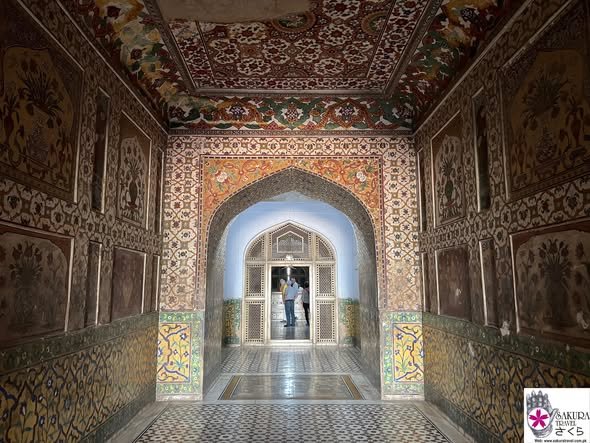
The tomb is located in Shahdara Bagh, on the banks of the Ravi River, surrounded by formal gardens laid out in the charbagh (four-quadrant) style typical of Persian and Mughal landscaping. Though more modest than other imperial tombs like the Taj Mahal, Jahangir’s tomb is celebrated for its delicate ornamentation, intricate frescoes, marble inlay work, and the extensive use of red sandstone.Key Features are Structure The tomb is a square structure, each side measuring about 22 meters. It lacks a central dome—an unusual feature for Mughal tombs—possibly due to Jahangir’s own wish for simplicity.Minarets in which Each corner of the tomb is adorned with a 30-meter-tall minaret, topped with white marble cupolas.Interior highlight of the interior is the cenotaph in the central chamber, made of white marble and inlaid with pietra dura (stone inlay). It bears the inscription of the Kalima (Islamic declaration of faith) and Jahangir’s full title.
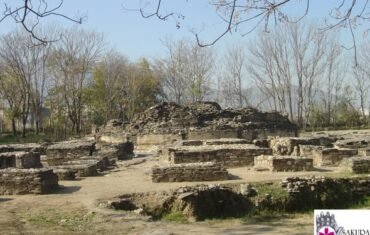
The tomb complex originally formed part of a larger royal enclosure, which included the Akbari Sarai (a resting place for travelers) and the Tomb of Asif Khan, Jahangir’s brother-in-law. The entire site was once enclosed by high walls and featured water channels, fountains, and walkways that enhanced the tranquility of the area.
Despite centuries of wear and colonial neglect—especially during British rule, when parts of the site were damaged or repurposed—the tomb has remained a symbol of Mughal cultural legacy in Pakistan. It has been protected under Pakistani law and has undergone various restoration efforts.
Today, the site is a popular tourist attraction and a valuable educational resource for historians, architects, and art lovers. It serves not only as a burial site but also as a reminder of the artistic brilliance and historical depth of the Mughal Empire.
The Tomb of Jahangir is more than just a mausoleum; it is a silent testament to a time when art, architecture, and empire flourished in the Indian subcontinent. With its blend of serenity and sophistication, the tomb continues to enchant visitors and historians alike, standing as a proud emblem of Pakistan’s rich Mughal heritage.
For tour arrangements in Pakistan, please feel free to contact us my telephone, WhatsApp or email us at Sakura Travel.
sakuratr2004@gmail.com
WhatsApp: 0092 332 8501039