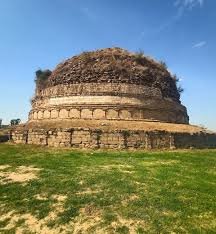
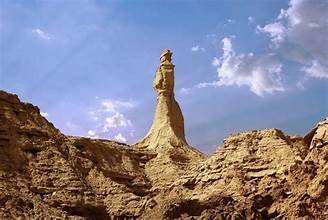
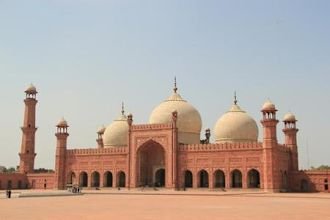
Multan, often referred to as the “City of Saints,” is one of the oldest and most historically rich cities in South Asia. Located in the southern region of Pakistan’s Punjab province, Multan has stood the test of time for thousands of years. It has witnessed the rise and fall of great empires, the spread of religions, and the growth of spiritual and cultural traditions. From ancient Hindu temples to Islamic conquests and colonial rule, Multan’s layered history reflects the broader story of the Indian subcontinent.
The origins of Multan can be traced back more than 5,000 years, making it one of the oldest continuously inhabited cities in the world. Archaeological evidence suggests connections with the Indus Valley Civilization, while ancient texts and records from Greek historians refer to Multan as “Malli” or “Malava.” One of the most well-known historical episodes involving Multan is the invasion by Alexander the Great in 326 BCE. His army faced fierce resistance from the local people, and he was severely wounded during the siege of the city’s citadel.
In ancient times, Multan was a prominent Hindu religious center, known especially for the Sun Temple (Surya Mandir). Pilgrims from across the region visited this temple, making it an important spiritual and economic hub. The temple brought fame and wealth to the city until the arrival of Muslim conquerors in the early 8th century.
A significant turning point in Multan’s history came in 712 CE with the arrival of Muhammad bin Qasim, an Arab general of the Umayyad Caliphate. He brought Islam to the region, and Multan soon transformed into a center of Islamic learning and culture. Over time, the city became especially renowned for its Sufi traditions. Saints such as Hazrat Baha-ud-Din Zakariya, Shah Rukn-e-Alam, and Shah Shams Tabrez settled in Multan and played a key role in spreading Islam through peaceful preaching and spiritual teachings. Their shrines continue to attract devotees from all over the country and beyond, giving the city its famous title, “City of Saints.”
Throughout the medieval period, Multan came under the control of various empires and dynasties, including the Ghaznavids, the Delhi Sultanate, the Mughals, and the Afghans. Each of these rulers contributed to the development of the city’s architecture, economy, and culture. The Mughal era, in particular, was marked by prosperity and architectural development, including the construction of beautifully decorated mosques and tombs.
In the 18th and 19th centuries, Multan fell into the hands of the Sikhs and later the British. The Siege of Multan in 1848–49 was a key event that led to the city becoming part of British India. During British rule, the city’s infrastructure improved, with new roads, railways, and administrative buildings being constructed.
Following the Partition of British India in 1947, Multan became part of the newly formed state of Pakistan. Since independence, the city has continued to grow as an economic and cultural center. It is known today for its agriculture (especially mangoes and cotton), handicrafts, pottery, and traditional bazaars. Despite modernization, Multan has retained its spiritual and historical essence. Landmarks such as the Multan Fort, Shah Rukn-e-Alam’s tomb, and the old city bazaars remain popular both for their historical value and their cultural charm.
In conclusion, Multan is not merely a city with a long history; it is a living narrative of South Asia’s cultural, spiritual, and political evolution. From its ancient roots in Hindu mythology to its transformation into a center of Sufism and Islamic scholarship, and from the days of empire to its modern role in Pakistan, Multan continues to stand as a symbol of resilience, tolerance, and tradition. Its history is a testament to the rich diversity and depth of human civilization on the subcontinent.
For tour arrangements in Pakistan, please feel free to contact us my telephone, WhatsApp or email us at Sakura Travel.
sakuratr2004@gmail.com
WhatsApp: 0092 332 8501039