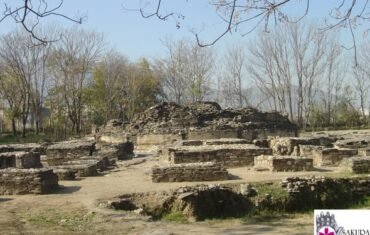
The Harappan Civilization, one of the earliest urban societies in the Indian subcontinent, flourished around 3300 to 1300 BCE in the Indus Valley. This ancient civilization is renowned for its advanced city planning, sophisticated drainage systems, and rich artistic culture. Among the various cultural artifacts that have been uncovered, Harappan jewellery is one of the most intriguing, reflecting not only the technological and artistic achievements of the time but also the complex socio-economic networks that existed across the region. Within this context, the Carbelina stone plays a significant role in understanding the materials used for Harappan jewellery and their connections to broader trade and cultural exchanges.
The Carbelina stone is a distinctive type of gemstone that has been identified in the archaeological remains of the Harappan Civilization. Although the precise geological origin of the stone remains a subject of debate, it is widely believed to have been traded from distant regions, perhaps beyond the boundaries of the Indus Valley itself. The stone is valued for its vivid, translucent appearance and its lustrous surface, characteristics that make it an attractive material for crafting ornamental items.
The Carbelina stone is not as well known as some other gemstones used in Harappan jewellery, such as agate, carnelian, or lapis lazuli. However, its presence in Harappan sites offers valuable insights into the trade routes and resource networks that spanned across the ancient world. It is often found in the form of beads or pendants, suggesting its primary use in personal adornment.
Jewellery in the Harappan Civilization was more than just ornamental; it carried significant cultural and symbolic meanings. Beads, necklaces, bracelets, and earrings were often crafted from a wide variety of materials, ranging from semi-precious stones to metals, shells, and ivory. The production of jewellery in Harappa was highly skilled, with artisans employing techniques like drilling, polishing, and engraving to create intricate designs.
Materials for jewellery were sourced from diverse regions, and the presence of Carbelina stone suggests that the Harappans had access to a wide range of natural resources. Some of these materials were sourced locally, while others were traded over long distances, highlighting the Harappans’ engagement in inter-regional trade. The Carbelina stone, with its foreign origins, indicates that Harappan artisans were not only adept at utilizing local resources but were also exposed to exotic materials that added value and prestige to their jewellery.
One of the most striking features of the Harappan Civilization is its extensive trade networks. The civilization was connected to regions far beyond the Indus Valley, from the Arabian Peninsula to Mesopotamia and even Central Asia. Goods such as cotton, beads, pottery, and precious stones were exchanged along these trade routes, and the Carbelina stone may have been one such traded commodity.
The Harappans were known to engage in maritime trade, with ports like Lothal acting as hubs for both domestic and international commerce. The discovery of Carbelina stone in Harappan archaeological sites suggests that the stone was not a locally sourced material but was likely imported from distant regions. It has been speculated that the stone may have come from areas in the Arabian Peninsula, where similar gemstones were known to exist.
By tracing the origins and movement of materials like the Carbelina stone, archaeologists can reconstruct the extent and complexity of the Harappan trade networks. These networks were crucial in sustaining the civilization’s economy and facilitating cultural exchanges. The use of such materials in jewellery is a testament to the interconnectedness of ancient societies, revealing that the Harappans were part of a larger web of trade and cultural interactions.
In Harappan society, jewellery was not merely a fashion statement but a symbol of social status, wealth, and prestige. The use of precious stones like the Carbelina stone would likely have been associated with elite individuals or important social classes. The choice of materials for jewellery was often a way to convey social identity, and the Carbelina stone’s relatively rare occurrence could indicate its association with higher-status individuals or ritual contexts.
In addition to their aesthetic appeal, gemstones and beads in Harappan jewellery may have held symbolic significance, reflecting spiritual beliefs or acting as protective amulets. The selection of certain stones was likely influenced by their supposed magical or healing properties, as evidenced by the cultural practices of many ancient societies. The Carbelina stone’s luminous quality may have contributed to its perceived value, as people often ascribed supernatural properties to shimmering or iridescent materials.
The Carbelina stone, though not as widely studied or recognized as other gemstones from the Harappan Civilization, offers significant insights into the culture and trade practices of this ancient society. Its use in jewellery highlights the Harappans’ expertise in working with a diverse range of materials and their connections to far-reaching trade networks. By examining such artifacts, scholars gain a deeper understanding of the Harappan worldview, including the importance of material culture in social stratification and the symbolic significance of gemstones. The Carbelina stone is just one example of the many treasures that reveal the complexity and sophistication of the Harappan civilization, reminding us of the profound artistic and cultural achievements of this ancient society.
For tour arrangements in Pakistan, please feel free to contact us my telephone, WhatsApp or email us at Sakura Travel.
sakuratr2004@gmail.com
WhatsApp: 0092 332 8501039